
Pressure into Performance
How Leaders Deliver Results When Conditions Aren’t Ideal
A leadership keynote for organisations operating under sustained pressure, where performance matters, conversations are harder, and the cost of getting it wrong is real.
The Problem This Keynote Addresses
Most leadership advice assumes conditions that don’t exist.
Time to talk things through.
Emotionally regulated people.
Room for mistakes.
Goodwill to spare.
In many organisations, leaders operate without those luxuries.
Pressure is constant.
Capacity is stretched.
Decisions carry consequences.
And unresolved issues quietly erode performance.
Pressure into Performance is designed for leaders who are expected to deliver results without waiting for conditions to improve.

The Central Premise
If a leadership approach doesn’t hold up under pressure, it isn’t fit for purpose.
When pressure increases:
Behaviour changes.
Standards blur.
Avoidance becomes rational.
“Good leadership habits” quietly fail.
This keynote examines what actually helps leaders maintain performance, accountability, and trust when pressure is non-negotiable.
Not in theory.
In practice.

What Leaders Learn
This keynote gives leaders practical clarity on:
How pressure alters behaviour — theirs and others’.
Why avoidance feels sensible under pressure (and how to counter it).
How to maintain accountability without creating fear.
How to protect performance without burning people out.
How to intervene earlier, before issues harden into crises.
How to lead firmly and humanely at the same time.
Leaders leave with language, judgement, and behavioural anchors they can use immediately.

What Makes This Keynote Different
This is not a motivational talk.
It does not rely on energy, slogans, or emotional uplift.
Instead, Andy challenges several leadership ideas that:
Work well in calm conditions.
Quietly fail when pressure increases.
Not to provoke — but because leaders are often blamed for using tools that were never designed for their reality.
The focus is on durable leadership behaviour:
What holds.
What breaks.
What to stop doing.
What to do instead.

Outcomes Organisations See
Organisations typically report:
Clearer expectations and standards.
Earlier, better-quality conversations.
Reduced performance drift.
Less emotional exhaustion in leaders.
Fewer issues escalated late and messily.
Stronger trust without lowered standards.
Not because pressure disappeared, but because leaders handled it more effectively.
Who we have worked with:





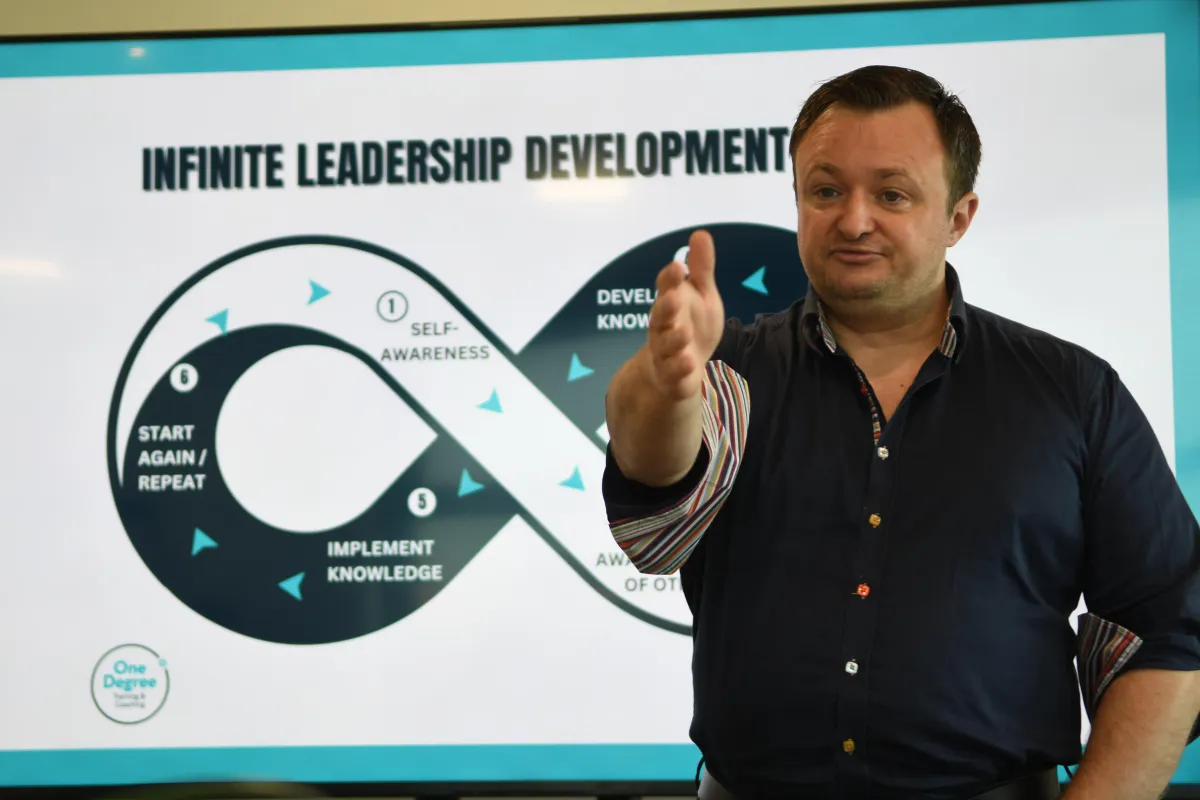
Leadership that works when pressure is unavoidable.
Who This Keynote Is For
This keynote works best for:
Senior leadership teams.
Experienced managers under sustained pressure.
High-potential leaders stepping into complex roles.
Organisations where performance, safety, or delivery genuinely matter.
Common environments include:
Engineering and manufacturing.
Energy and infrastructure.
Logistics and operations.
Defence-adjacent and regulated sectors.
If leaders are expected to deliver results while conditions remain difficult, this keynote fits.
Who This Is Not For
This keynote is not suitable if you are looking for:
Motivation without behavioural change
Comfort over challenge
Leadership advice built for ideal conditions
Quick wins that fade under pressure
This work assumes leaders are serious about performance, and honest about the conditions they’re operating in.
What Happens After the Keynote
For some organisations, this keynote stands alone.
For others, it becomes a starting point for:
Deeper leadership workshops.
Behaviour-focused development programmes.
Executive or leadership team coaching.
There is no obligation to continue.
The keynote delivers value in its own right.
A Final Note...
If your organisation is operating under pressure and needs leadership that still works, not leadership that sounds good, this is a conversation worth having.
If not, it’s better to know early.
Page built by Lincolnshire Marketing